
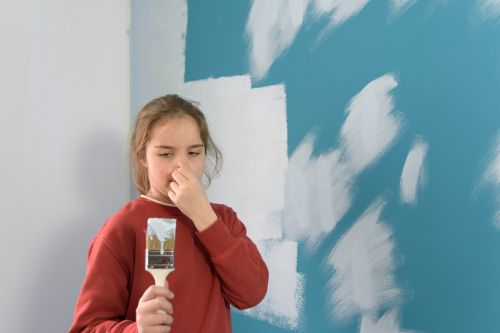
The smell of fresh paint can be pleasant for some people (it’s a sign of renovation!) and very annoying for others. The truth is that this characteristic smell is not harmless: it comes from chemical compounds emitted by the paint as it dries. If you’re wondering how many days you’re going to have to put up with it, here are the keys to understanding how and why it disappears, as well as some tips to speed up the process.
Where the smell comes from: the chemistry behind the paint
-
Volatile organic compounds (VOCs): These are substances that are released in the form of gases and give rise to the ‘fresh paint’ smell. They are present, to a greater or lesser extent, in both solvent-borne and water-borne paints.
-
Drying agents and additives: In addition to pigments and resins, paints include components that allow faster drying or longer durability. These also generate odours during evaporation.
In a nutshell: Odour is mainly due to the release of certain volatile chemicals. The more VOCs the paint contains, the stronger the odour.
Contact our professionals
How long does it really last?
There is no single answer, because it varies according to:
-
Type of paint
-
Water-based (acrylic or latex): These tend to emit fewer VOCs, so the odour usually disappears within 24-72 hours.
-
Solvent-based or synthetic: They require more time to evaporate their components; the odour may persist for up to a week or more.
-
-
Ventilation of the room
-
A room with large windows and air currents eliminates the odour sooner, whereas in enclosed spaces the odour is concentrated.
-
-
Environmental conditions
-
High humidity or low temperatures prolong evaporation and thus the odour.
-
A dry and warm climate favours faster drying of the paint.
-
-
Number of coats
-
Each new coat adds volatile compounds to the environment. The more coats or surfaces painted at the same time, the longer the odour lasts.
-
Recommendations to accelerate the disappearance of the odour
-
Ventilate constantly
-
Ideally, create air currents by opening windows and doors opposite each other.
-
If you can’t open them all day, take advantage of the mornings and evenings to renew the air.
-
-
Use containers with water and salt or vinegar.
-
Some people swear by this homemade trick: placing one or more containers with water and salt or white vinegar in the room helps to absorb some of the odours.
-
Renew the contents every 24 hours.
-
-
Activate fans or extractors
-
They help to displace volatile compounds to the outside, especially in poorly ventilated bathrooms or kitchens.
-
-
Activated carbon or bicarbonate
-
These products tend to absorb odours in small spaces (cupboards, small rooms). They won’t work miracles in large rooms, but they can contribute a little.
-
What if the smell doesn’t go away?
Sometimes the smell seems to linger longer than usual. Before you worry, check:
-
The expiry date of the paint: A product beyond its shelf life may have a stronger, more unpleasant odour.
-
Application in inappropriate conditions: Painting in high humidity or without the optimum temperature delays complete drying.
-
Paint quality: Some budget brands contain more low-quality solvents. The price difference is often reflected in the intensity and duration of the odour.
If you think the smell is excessive or there are adverse reactions (headache, irritation), consult a professional or seek to aerate the space more effectively (use of industrial fans, dehumidifiers, etc.).
Additional care
-
Protect sensitive persons
-
Children, pregnant women or people with respiratory problems (asthma or allergies) may be more affected by the odour. Ideally, avoid prolonged exposure.
-
-
Avoid mixing paints
-
Although it may sound tempting to use leftovers from other pots, mixing different types of paint can lead to more intense smells or affect drying.
-
In conclusion, the time it takes for the paint smell to go away depends on the composition of the paint, ventilation, weather conditions and the number of coats applied. Generally, you can expect the smell to be virtually unnoticeable within 2-3 days (if you have used acrylic paint and ventilated properly), although in some cases it can take up to a week or even longer.
Looking for an impeccable finish with minimum odour nuisance? At Bartolomé Bas Pinturas we guide you in the choice of low VOC paints and give you all the advice you need to make your renovation project as pleasant and healthy as possible, because a freshly painted house should look and smell like new, without complications!
Other publications that may interest you
How to tell if a wall needs priming before painting
Finding a crack in a façade just when we are thinking about repainting it raises a logical question: is it enough to fill it and paint over it, or does something else need to be done? The answer depends on the type of fissure, what caused it and, above all, whether it…
Silicate paint: what it is and when to use it on façades and older properties
Finding a crack in a façade just when we are thinking about repainting it raises a logical question: is it enough to fill it and paint over it, or does something else need to be done? The answer depends on the type of fissure, what caused it and, above all, whether it…
Cracks and fissures in façades: what to repair before repainting
Finding a crack in a façade just when we are thinking about repainting it raises a logical question: is it enough to fill it and paint over it, or does something else need to be done? The answer depends on the type of crack, what caused it and, above all, whether it…