
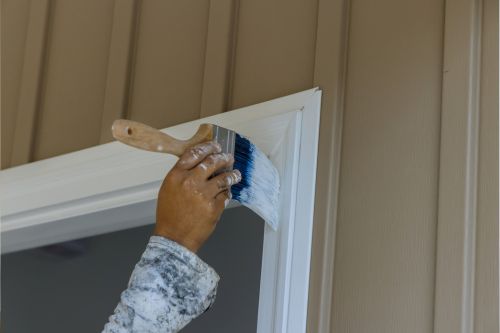
Wooden doors are a key element in any home, providing warmth and style. However, over time, they can become worn or lose their original colour. Painting them is an excellent way to renew their appearance and protect them from deterioration. Below, we explain a practical and effective method for painting wooden doors, achieving an impeccable finish.
1. Why is painting wooden doors a good idea?
Painting a wooden door not only improves its aesthetics, but also offers several advantages:
- Protection: Paint protects the wood against wear and tear and damage caused by moisture.
- Personalisation: You can choose colours that harmonise with the style of your home.
- Economical: It is a more affordable solution than replacing worn doors.
Contact our professionals
2. Checklist: what you need before you start
Before you start, make sure you have everything you need:
- Basic tools: brushes, small roller, paint tray, masking tape.
- Preparation materials: Medium and fine grit sandpaper, clean rags, degreaser.
- Suitable paint: Synthetic enamels, acrylic paint or varnish depending on the desired finish.
- Primer: Special for wood, ideal for a uniform finish.
3. Step by step to paint wooden doors
Step 1: Remove the door or protect the area
- If possible, remove the door from its hinges to work more comfortably.
- If you can’t remove it, cover the floor and nearby areas with plastic or protective paper.
Step 2: Clean and prepare the wood
- Use a damp cloth and degreaser to remove dirt.
- Sand the door thoroughly, starting with medium-grit sandpaper to remove old paint or smooth the surface. Finish with a fine-grit sandpaper for a smoother finish.
Step 3: Apply primer
- Priming is essential to ensure that the paint adheres properly. Apply it evenly with a brush or roller and allow it to dry according to the manufacturer’s instructions.
Step 4: Paint the door
- Use a brush for mouldings or details and a roller for flat areas.
- Apply a thin coat of paint and allow to dry. Then apply a second coat for a more uniform and durable colour.
Step 5: Finish and protect
- If you want a more durable finish, apply a coat of varnish or sealer once the paint is completely dry. This will protect the door from scratches and wear.
4. Common mistakes when painting wooden doors and how to avoid them
- Not sanding the surface well: This can cause the paint not to adhere properly. Make sure you spend enough time sanding.
- Applying too much paint at once: Thick coats tend to drip and generate bubbles. Work with thin, even coats.
- Omitting primer: Without primer, paint can look uneven, especially if the previous colour was dark.
5. Tips for a professional finish
- Work in a ventilated area: This will help the paint dry properly and prevent the build-up of strong odours.
- Use quality brushes and rollers: The right tools make all the difference to the final finish.
- Be patient: Allow each coat to dry completely before applying the next.
Other publications that may interest you
How to tell if a wall needs priming before painting
Finding a crack in a façade just when we are thinking about repainting it raises a logical question: is it enough to fill it and paint over it, or does something else need to be done? The answer depends on the type of fissure, what caused it and, above all, whether it…
Silicate paint: what it is and when to use it on façades and older properties
Finding a crack in a façade just when we are thinking about repainting it raises a logical question: is it enough to fill it and paint over it, or does something else need to be done? The answer depends on the type of fissure, what caused it and, above all, whether it…
Cracks and fissures in façades: what to repair before repainting
Finding a crack in a façade just when we are thinking about repainting it raises a logical question: is it enough to fill it and paint over it, or does something else need to be done? The answer depends on the type of crack, what caused it and, above all, whether it…