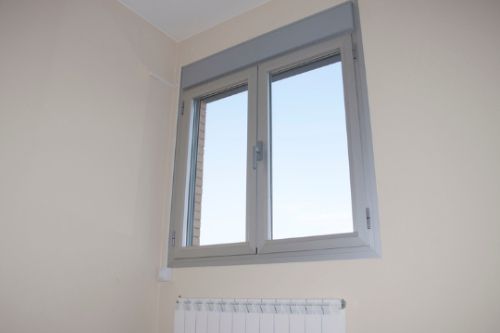
Yes, aluminium windows can be painted, even when they have a factory-applied coating, but the final result mainly depends on three factors: proper cleaning, preparation that promotes good adhesion and a primer that is compatible with aluminium.
Painting directly over a smooth, glossy or contaminated profile can cause the finish to scratch easily, blister or eventually peel away.
For this reason, when renovating aluminium windows, the correct sequence is usually:
cleaning → preparation → sanding or keying → bonding primer → finishing coat
Not all windows require exactly the same treatment. There are important differences between bare aluminium, powder-coated aluminium, anodised profiles and windows that have already been repainted in the past.
At Bartolomé Bas Pinturas, we have been working in painting and property renovation since 1984 in Jávea/Xàbia and across the northern Costa Blanca. With metal elements, good preparation is often just as important as the final coat of paint.
Get in touch with our experts
Before painting: identify the existing finish on the window
At first glance, all aluminium windows may look the same, but the existing coating completely determines how the work should be carried out.
You may be dealing with:
- powder-coated aluminium;
- anodised aluminium;
- unpainted aluminium;
- profiles that have previously been repainted;
- deteriorated or flaking paint;
- areas with oxidation or surface corrosion.
Before choosing a primer, you need to know exactly what type of surface you will be working on.
The same principle applies to other professional treatments for metal enclosures: the paint system must be adapted to the metal, the previous finish and the environmental exposure.
Can a powder-coated aluminium window be painted?
Yes.
In fact, this is one of the most common cases when homeowners want to update the appearance of a property without replacing the windows.
For example, old white, brown or green aluminium can be transformed into more contemporary shades such as:
- white;
- grey;
- anthracite;
- black;
- sand tones;
- other colours compatible with the system being used.
The problem is that factory-applied coatings usually create a hard, relatively smooth surface.
If enamel paint is applied directly, there may not be enough adhesion.
For this reason, when the existing coating is sound, it is normally advisable to clean, degrease and key the surface before applying a compatible bonding primer.
There is no need to remove a factory coating that is perfectly adhered simply because you want to change the colour.
Preparation is the most important step
One of the most common mistakes is assuming that primer will solve any adhesion problem.
It will not.
Before priming, the surface should be:
- clean;
- dry;
- free from grease;
- free from dust;
- free from salts;
- free from silicone and other contaminants;
- free from loose paint;
- properly prepared to receive the new coating system.
In our guide on how to paint metal enclosures correctly, we stress precisely this point: a durable finish starts before the first coat of paint is applied.
Step 1. Clean the aluminium profiles thoroughly
Windows collect more dirt than it may seem.
On the profiles you may find:
- grease from hands;
- dust;
- cleaning product residues;
- environmental contamination;
- salt deposits;
- waxes;
- silicone-based products;
- dirt around seals and fittings.
Painting over these contaminants reduces adhesion.
The surface should be cleaned with a product that is compatible with the existing finish and then allowed to dry completely.
In homes close to the sea, particular attention should be paid to salt deposits.
In Jávea, Dénia, Moraira and other coastal areas, exterior elements are exposed for years to humidity and marine aerosols. Our guide to paints and materials for houses near the sea explains why preparation and maintenance of metal elements are especially important in this environment.
Step 2. Protect glass, seals and mechanisms
Before sanding, priming or painting, everything that should not receive paint needs to be protected.
Especially:
- glass;
- rubber seals;
- weatherstrips;
- handles;
- hinges;
- locks;
- tracks;
- mechanisms;
- sealants;
- adjacent walls.
The window drainage holes must also remain clear.
These small precautions matter because the window must continue to function correctly after the work is finished.
Painting seals, mechanisms or sliding areas can cause problems with opening, closing or watertightness.
Step 3. Sand or key powder-coated aluminium
When the existing coating is well adhered, the aim is usually not to remove it completely.
The objective is to reduce the gloss and create a suitable surface for the primer to bond correctly.
This is done with controlled, even sanding or keying.
Afterwards, all dust must be removed completely.
The surface should be clean, dry and matt.
The technical data sheet for Rust-Oleum aluminium primer specifically recommends removing grease and contaminants, removing loose paint and lightly sanding glossy surfaces before priming.
Do aluminium windows always need to be sanded?
It depends on the system being used.
There are modern high-adhesion primers designed to work on difficult surfaces, but this does not mean surface preparation can be ignored.
The manufacturer of each primer should specify:
- which substrates it can be applied to;
- whether sanding is required;
- what cleaning is required beforehand;
- drying time;
- recoat time;
- compatible finishing products.
When aluminium is powder-coated and very glossy, keying usually provides a more reliable base.
Step 4. Remove deteriorated paint
If the window has already been painted in the past and the paint is peeling, it is not advisable to paint over it.
Any areas that have lost adhesion should be removed.
Otherwise, the new paint may adhere perfectly to an old layer that is itself separating from the aluminium.
The result will eventually peel away as well.
This problem is not unique to aluminium. It is one of the basic principles of maintaining painted metal enclosures: before renewing the finish, the previous layers must be checked to make sure they remain sound.
Step 5. What primer should be used for aluminium windows?
This is one of the most important decisions.
Aluminium is a non-ferrous metal and requires compatible products.
Depending on the type of profile and the system selected, specific primers for non-ferrous metals or high-adhesion primers suitable for aluminium may be used.
The purpose of this layer is to create a stable bridge between the surface and the final finish.
On bare aluminium
Where uncoated aluminium is exposed, a system specifically compatible with aluminium must be used.
It should not be treated in exactly the same way as iron.
On powder-coated aluminium
If the original coating is sound, it can form part of the substrate once it has been properly cleaned and prepared.
In this case, a primer with good adhesion to painted or low-porosity surfaces is particularly important.
On anodised aluminium
Anodised aluminium has a different surface and can be more difficult to repaint.
It is advisable to confirm specifically that the selected primer is suitable for this type of finish and to carry out an adhesion test whenever there is any doubt.
Primer for aluminium is not the same as anti-rust primer for iron
This is a common source of confusion.
Aluminium and iron are both metals, but they do not behave in the same way.
With iron or steel, rust formation is a characteristic problem and specific anti-corrosion systems may be used.
With aluminium, the product must be selected bearing in mind that we are working with a non-ferrous metal.
For this reason, a primer should not be chosen simply because the tin says “for metal”.
It must specifically state that it is suitable for aluminium.
The same applies when working on other metal elements. Our guide on how to paint rusty grilles correctly uses a different process precisely because rusted iron presents a different problem from an aluminium window.
Step 6. Apply the primer correctly
Once the surface has been prepared, the primer can be applied.
It is important to respect:
- application temperature;
- humidity;
- recommended film thickness;
- drying time;
- minimum and maximum recoat times;
- the specified application method.
More product does not mean better adhesion.
An excessively thick coat can even cause drying or finishing problems.
Environmental conditions also matter, especially for exterior work.
It is not advisable to paint profiles that are very hot from direct sun exposure or to work outside the conditions specified by the manufacturer.
Step 7. Choose the finishing coat
Once the primer is dry, a compatible finishing product can be applied.
Suitable metal enamels are commonly used to provide:
- adhesion;
- resistance to wear;
- washability;
- colour stability;
- weather resistance for exterior applications.
The finish can be:
- matt;
- satin;
- semi-gloss;
- gloss.
For windows, a finish that is easy to clean and offers good mechanical resistance is usually practical.
Is it better to paint aluminium windows by spray, roller or brush?
All three methods can be used depending on the product, the job and the desired finish.
Spray painting
It can produce a very even finish that visually resembles a factory coating when the work is carried out correctly.
However, it requires:
- experience;
- good protection of the surrounding area;
- control of overspray;
- suitable equipment;
- thorough preparation.
In an occupied property, particular care must be taken to protect glass, walls, furniture and floors.
Roller
A suitable roller can produce an even finish and may offer greater control for certain jobs.
The roller should be selected according to the enamel being used.
Brush
A brush can be useful for corners, junctions and small areas.
To avoid visible brush marks, it is important to use the right tool and work the product correctly.
The application method cannot compensate for poor preparation.
Even paint applied perfectly by spray will eventually peel if there is grease underneath or if the surface does not provide adequate adhesion.
Can aluminium windows be painted without removing them?
Yes, in many cases.
Frames and opening sections can often be renovated without completely removing the window, although this will depend on the design and the result required.
Particular care is needed around:
- junctions between profiles;
- areas next to the glass;
- seals;
- hinges;
- locks;
- tracks;
- edges.
On sliding windows, contact surfaces should not build up layers of paint that could interfere with movement.
Can aluminium windows also be painted on the outside?
Yes, but the system must be suitable for exterior exposure.
An exterior window is exposed to:
- solar radiation;
- rain;
- temperature changes;
- humidity;
- pollution;
- salt deposits in coastal areas.
The finish therefore needs to provide sufficient resistance for that environment.
On the Costa Blanca, it is also advisable to establish a regular cleaning and inspection routine. The same applies to the maintenance of grilles, gates and other exterior metalwork, where identifying loss of adhesion or deterioration early can prevent more extensive work later on.
What if the windows are close to the sea?
Marine exposure deserves special consideration.
Aluminium has good corrosion resistance, but profiles, fittings, joints, screws and coatings can deteriorate over time.
Salt deposits can also interfere with the preparation of a surface that is going to be repainted.
For this reason, before painting an exterior window in Jávea, Dénia or Moraira, thorough cleaning is especially important.
Primer should not be applied over a surface that still has salt contamination.
Common mistakes when painting aluminium windows
Painting without degreasing
This alone can be enough to cause the finish to lose adhesion.
Applying enamel directly over smooth aluminium
The result may look good at first and then peel later.
Using any metal primer
Not all products designed for iron or steel are suitable for aluminium.
Not sanding deteriorated paint
A new coat cannot properly stabilise old paint that is already coming away.
Painting rubber seals and weatherstrips
This can impair their function and affect the final appearance.
Blocking drainage holes
The openings designed to drain water must remain clear.
Painting mechanisms and friction areas
This can make the window more difficult to open or close.
Working on profiles that are too hot
Direct sunlight can significantly increase the temperature of aluminium and affect application and drying.
How long can a repainted aluminium window last?
There is no single figure that applies to every job.
Durability depends on:
- the initial condition;
- surface preparation;
- the primer;
- the quality of the finish;
- sun exposure;
- humidity;
- proximity to the sea;
- maintenance;
- cleaning frequency;
- how the window is used.
A properly prepared system can considerably extend the visual life of the window or enclosure.
However, if the paint begins to deteriorate, intervening early is usually much easier than waiting until widespread peeling occurs.
Is it worth painting the windows or is it better to replace them?
It depends on why the work is being considered.
If the windows function correctly and the problem is mainly aesthetic, repainting them can significantly transform the appearance of the property without replacing all the window frames.
It may make sense when:
- the colour looks dated;
- you want to create a more consistent decorative scheme;
- the existing coating has aged;
- the façade has been renovated;
- you want to change the interior appearance;
- the profiles remain structurally sound.
However, paint will not correct insulation problems, deformation, faulty closing mechanisms or insufficient performance from the window system itself.
Aesthetic renovation should be distinguished from functional improvement.
How to tell whether an aluminium window is ready to paint
Before applying primer, you should be able to answer yes to the following questions:
- Is it clean?
- Is it completely dry?
- Have grease and contaminants been removed?
- Is any remaining old paint firmly adhered?
- Have glossy surfaces been prepared correctly?
- Has all sanding dust been removed?
- Are the glass, seals and mechanisms protected?
- Is the primer compatible with aluminium?
- Is the finishing coat compatible with the primer?
- Are the environmental conditions suitable?
If any answer is no, the surface is probably not ready to paint yet.
Painting aluminium windows in Jávea and the Costa Blanca
In homes in Jávea/Xàbia, Dénia, Moraira, Benitachell and other nearby towns, it is common to find aluminium windows and enclosures that have been exposed to sun and the coastal environment for many years.
Changing the colour can significantly update the appearance of a property, but the final result will depend on the preparation and the system used.
Before starting, it is advisable to assess:
type of aluminium → existing finish → condition → exposure → primer → final paint
If you are unsure which product to use, we offer professional advice on choosing paints and primers according to the substrate and the conditions of the job.
We also carry out professional house painting and renovation work in Jávea and other towns across the northern Costa Blanca.
In summary: yes, aluminium can be painted, but not without preparation
Aluminium windows can be painted and completely transformed without having to replace them, provided they are still in good functional condition.
The most important step is not choosing the colour first.
It is preparing the substrate correctly.
A properly planned process consists of:
- Identify the type of aluminium and the existing finish.
- Clean and degrease the surface.
- Protect the glass, seals and mechanisms.
- Remove deteriorated paint.
- Key or sand the surface where required.
- Remove all dust completely.
- Apply a primer compatible with aluminium.
- Respect the required drying times.
- Apply a finish suitable for interior or exterior use.
Painting directly over smooth aluminium may look acceptable for a while; preparing, priming and painting it as a complete system is what makes it possible to achieve a genuinely durable result.
Frequently asked questions about painting aluminium windows
Can aluminium windows be painted?
Yes. Both bare aluminium and many powder-coated aluminium windows can be repainted, provided that the surface is prepared correctly and compatible primer and finishing products are used.
Do you need to sand aluminium before painting it?
It depends on the existing finish and the system being used. Glossy powder-coated aluminium is usually keyed to reduce the sheen and improve adhesion. The instructions for the selected primer should always be followed.
What primer should be used to paint aluminium?
A primer specifically compatible with aluminium or other non-ferrous metals should be used. In some cases, high-adhesion primers designed for difficult surfaces may be suitable.
Can aluminium be painted directly without primer?
It is not recommended unless the product manufacturer specifically states that the system can be applied without a separate primer. A suitable primer improves the bond between the aluminium and the finishing coat.
Can powder-coated aluminium be painted?
Yes. If the existing coating is sound, it can normally be cleaned, degreased, keyed and prepared with a compatible primer before the new finish is applied.
Can anodised aluminium be painted?
It can be painted, but particular attention must be paid to surface preparation and primer compatibility. A system specifically suitable for anodised aluminium should be used, and an adhesion test may be advisable where necessary.
What paint is used for aluminium windows?
Finishing paints or enamels compatible with the primer and suitable for the intended conditions are used. For exterior applications, they should provide sufficient resistance to sunlight, humidity and weather exposure.
Can aluminium windows be painted without removing them?
In many cases, yes. Glass, seals, fittings, tracks and mechanisms must be carefully protected, and paint should not be allowed to build up on contact or sliding surfaces.

Bartolomé Bas
Professional painter in Jávea since 1984, specialising in decorative painting, waterproofing, renovations and damp treatment. Founder of Bartolomé Bas Pinturas. More than 35 years of experience transforming homes and business premises on the Costa Blanca.
Professional profiles:
How to refresh kitchen cabinets with paint without replacing them
Renovating kitchen cabinets with paint can completely transform a room without dismantling the entire kitchen or replacing the doors, drawers and cabinet units. It is a particularly attractive option when the cabinets are still functioning properly but their colour,…
Can Aluminum Windows Be Painted? Preparation, Priming, and Finishing
Yes, aluminium windows can be painted , even when they have a factory-applied coating, but the final result mainly depends on three factors: proper cleaning, preparation that promotes good adhesion and a primer that is compatible with aluminium. Painting directly over…
How to tell if a wall needs priming before painting
Finding a crack in a façade just when we are thinking about repainting it raises a logical question: is it enough to fill it and paint over it, or does something else need to be done? The answer depends on the type of fissure, what caused it and, above all, whether it…