


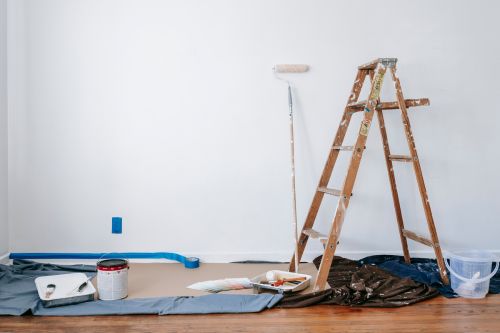
Proper preparation saves time, avoids splashes and allows paint to adhere better. Follow this plan – tested by Bartolomé Bas’s team of house painters – and you will achieve an impeccable finish without turning your home into a war zone.
Contact our professionals
Clear and organise the room
-
Remove pictures, curtains and light shelves two days before.
-
Place bulky furniture in the centre of the room; cover it with thick plastic, not with old dusty sheets.
-
Vacuum skirting boards and corners: loose dirt prevents the primer from setting properly.
Protecting floors and sockets
Spread corrugated cardboard or protective blanket from wall to wall. Kraft paper tends to tear with moisture from the paint. Cover sockets, switches and frames with blue masking tape – remove without residue for up to 14 days.
If you are also painting ceilings or areas in poor condition, consider our interior painting service: we will move and protect all the furniture for you.
Immediate cleaning area
Designate a corner with a bucket of warm water, microfibre cloths and several rubbish bags. Any drips are wiped up instantly and leave no marks. Keep the room ventilated: this will speed up the drying of the first coat and reduce odours.
Pro tips to avoid touch-ups
-
Drape the doors while painting: the overpressure from the roller will not splash on the frames.
-
Use a grazing light (a lamp attached to the wall) to detect dust specks or poorly sanded areas before you start.
-
Create perfect corners by placing two strips of tape in an ‘L’ shape and removing them diagonally while the paint is still fresh.
What to do with pets and children
Move dog or cat beds and food bowls into the finished room. Place children’s barriers in corridors so that the little ones do not touch the damp wall. The Spanish Association of Paediatrics recommends keeping chemicals out of reach and thoroughly ventilate any newly painted room (see their advice at aeped.es).
Signs that the room is ready for painting
-
No dust is left behind when you run your hand along skirting boards and frames.
-
Furniture grouped together and protected with heavy plastic.
-
Floor covered up to the edge of doors.
-
Sockets and light fittings covered with quality tape.
-
Windows open or mechanical ventilation activated.
When your home meets these points, the professionals at Bartolomé Bas Pinturas can concentrate on what really matters: applying the primer, the first coat and the decorative finish with total cleanliness and efficiency.
Other publications that may interest you
5 types of paint finishes
When it comes to painting, it is normal that people who do not have any knowledge or work in the field of painting and maintenance of colours in houses, such as our painters in Jávea and surroundings, simply base their decision on the choice of colour. But we cannot...

To all owners: this is what you need to know before you paint the walls of your rental home
As a landlord of a rental property, whether it is a short term or long term rental, maintenance is key to attracting quality tenants and thus protecting your financial investment. And it seems like something else that is on the back burner, but the truth is that...
How to paint a wall that has already been painted
Painting over or covering an old colour is always going to be different to painting over a new wall, in fact it can often be a challenge if you don't know how to execute it or who to trust. At Bartolomé we do a lot of work as painters in Jávea, and being an area with...