'/%3E%3Cpath%20fill='%23b2b2b2'%20d='M241%20382q0%2016%2017%2026%2017%2011%2042%2011t42-11q16-11%2017-26V269H241'/%3E%3Cpath%20fill='%239f7e00'%20d='M241%20379q0%2014%208%2023%209%209%2021%209%2014%200%2021-9%209-9%209-23V269h-59'/%3E%3Cpath%20d='M241%20339v-70h59v110q0%2014-9%2023l-6%205v-68h-15v72q-8%200-14-4v-68zm59%2040c0%2022%2015%2032%2029%2032%2021%200%2030-18%2030-32v-40h-59'/%3E%3Cpath%20fill='%239f7e00'%20d='M266%20277v5h2v12h-3v-5h2v-5h-9v5h2v5h-4v9h3v18h-5v10h34v-10h-5v-18h3v-9h-4v-5h2v-5h-9v5h2v5h-3v-12h2v-5zm42%20101q0%2010%206%2017%206%206%2015%207%2010-1%2016-7%206-7%206-17v-29h-43'/%3E%3Ccircle%20fill='%230044ad'%20cx='329.5'%20cy='372'%20r='6'/%3E%3Cellipse%20fill='%230044ad'%20cx='300'%20cy='340'%20rx='16'%20ry='21'/%3E%3C/svg%3E)
'/%3E%3C/svg%3E)

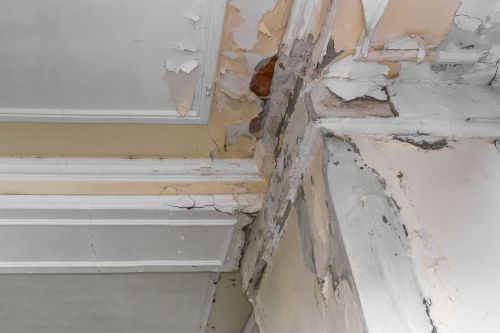
Damp on walls and ceilings does not always have the same cause. A black stain next to a window, a yellowish mark on the ceiling or a wall that is flaking from the floor may appear to be similar problems, but the solution varies completely depending on the cause.
Before painting, applying an anti-damp product or repairing a surface, it is essential to know whether the damp is caused by condensation, water ingress or capillary action. If you only treat the visible symptom rather than the root cause, the stain may reappear before long.
In this guide, we explain how to distinguish between each type of damp, what signs to look out for and when it is advisable to seek a professional assessment to prevent further damage to your home.
Get in touch with our experts
Quick answer: how do I know what type of damp I have?
The easiest way to identify the problem is to observe where the damp appears, when it gets worse and what it looks like:
| Type of damp | Where it usually appears | Common signs | Likely cause |
|---|---|---|---|
| Condensation | Windows, corners, bathrooms, kitchens, poorly ventilated bedrooms | Black mould, water droplets, musty smell | Excess water vapour and poor ventilation |
| Water ingress | Ceilings, façades, terraces, joints, exterior walls | Localised stains, damp marks, blistered paint | Water entering from the outside |
| Rising damp | Lower part of walls and partitions | Flaking paint, efflorescence, moisture rising from the floor | Water rising from the ground through the building materials |
If the damp appears at the bottom of the wall and rises from the floor, it may be rising damp. If it appears after rain or near a façade, terrace or roof, it is usually related to water ingress. If it appears in cold, poorly ventilated areas with surface mould, the most likely cause is condensation.
Why it is important to correctly identify the source of damp
Damp is not just an aesthetic problem. It can affect paint, coatings, plaster, wood, joinery and, in some cases, the healthiness of the indoor environment.
In addition, each type of damp requires a different intervention. For example, anti-mould paint can help in cases of condensation, but it will not solve an active leak on a terrace. In the same way, painting over a wall affected by rising damp without treating the root of the problem will cause the paint to lift again.
The World Health Organization guidelines on indoor dampness and mould warn that dampness in buildings can encourage the growth of mould and other biological agents when enough moisture is present.
That is why, before choosing a paint or repairing a wall, it is important to read the symptoms correctly and assess whether you need a professional treatment to remove damp from walls.
Condensation damp: what it is and how to recognise it
Condensation damp occurs when water vapour in the air comes into contact with cold surfaces and turns into small droplets. It is very common in homes with poor ventilation, insufficient insulation or significant temperature differences between indoors and outdoors.
It usually appears in winter, although in coastal or humid areas it can also occur at other times of the year.
Typical signs of condensation
You may suspect condensation if you notice:
- Black mould in corners, on ceilings, around joints or around windows.
- Windows frequently misting up.
- Water droplets on cold walls or joinery.
- A musty smell in closed rooms.
- Surface stains that return even after cleaning.
- Greater presence in bathrooms, kitchens, wardrobes and bedrooms.
Condensation usually affects areas with poor air circulation: behind furniture, exterior corners, cold ceilings or rooms that remain closed for many hours.
How to tell condensation apart from other types of damp
The key is that condensation is usually related to the indoor environment. It does not always appear after rain and, in many cases, it improves with ventilation, by increasing the surface temperature of the wall or by reducing water vapour.
If the mould is on the surface and there is no clear entry point for water from outside, the cause may be condensation. In these cases, in addition to cleaning and treating the area, it may be necessary to improve ventilation, use suitable paints and check for thermal bridges.
For this type of problem, it can help to understand the solutions available for damp and mould treatment in homes, especially when the problem reappears in bedrooms, bathrooms or poorly ventilated areas.
Damp caused by water ingress: when water enters from outside
Damp caused by water ingress occurs when water passes through a building surface: a façade, a roof, a terrace, a poorly sealed joint, a crack or a deteriorated part of the building.
Unlike condensation, water ingress is usually related to rain, irrigation, downpipes, terraces or exterior elements exposed to water.
Typical signs of water ingress
You may suspect water ingress if you notice:
- Localised stains on ceilings or walls.
- Yellowish or brown damp rings.
- Blistered or flaking paint.
- Damp that appears or gets worse after it rains.
- Leaks or damp areas near terraces, roofs or façades.
- Stains near windows, joints, cracks or points where materials meet.
In homes in coastal areas such as Jávea, Dénia, Moraira and the surrounding area, façades and terraces are highly exposed to rain, salt, wind and temperature changes. This can accelerate the deterioration of coatings, joints and waterproofing systems.
How to tell water ingress apart from condensation
Water ingress usually has an entry point. It may be a crack in the façade, a terrace with an incorrect slope, damaged waterproofing or an open joint.
A useful clue is to observe whether the stain grows after periods of rain. If the damp always appears in the same place, has defined edges and affects ceilings or exterior walls, the outside of the property should be inspected.
In these cases, painting the interior area is not enough. The water entry point must be resolved first. Depending on the case, this may require façade repair, crack sealing, terrace inspection or the application of terrace waterproofing systems adapted to the surface.
If the water is entering from the outside of the building, it may also be necessary to assess façade repair and painting work to protect the home against future leaks.
Rising damp: when water rises from the ground
Rising damp appears when water from the ground rises through the pores of building materials. It usually affects walls, partitions or surfaces in contact with the floor, especially on ground floors, in older houses, basements or homes with insufficient damp-proof barriers.
This type of damp is more complex because it does not depend only on ventilation or a specific crack. Water rises from the base of the wall and carries mineral salts that deteriorate paint and coatings.
Typical signs of rising damp
You may suspect rising damp if you notice:
- Damp in the lower part of the wall.
- Stains rising from the floor.
- Flaking or lifting paint around skirting boards.
- Efflorescence or white powder.
- Deteriorated skirting boards.
- Soft, sandy or degraded plaster.
- Persistent damp even without recent rain.
Rising damp usually forms a band of moisture at a low height. It does not always reach the ceiling, but it can advance if it is not treated properly.
How to tell rising damp apart from water ingress
The main difference is the direction. With rising damp, moisture rises from the floor. With water ingress, it usually enters from a side or upper point.
If the wall is damp at the base, the paint comes away near the skirting board and efflorescence appears, it is likely to be rising damp. On the other hand, if the stain appears in a higher area or near a terrace, window or façade, it may be water ingress.
Before applying paint, the surface should be inspected, the moisture level measured and the appropriate treatment chosen. Painting directly over a wall affected by rising damp is usually only a temporary solution.
A practical test to guide the diagnosis
Although the final diagnosis should be made by a professional, you can carry out an initial observation by following these steps:
1. Look at the height of the stain
If it is in the lower part of the wall, think of rising damp. If it is on ceilings or exterior walls, it may be water ingress. If it is in corners, windows or cold areas, it may be condensation.
2. Observe when it appears
If it gets worse after rain, check for water ingress. If it appears in winter, after showers, cooking or due to lack of ventilation, check for condensation. If it is always present and rises from the floor, check for rising damp.
3. Check its appearance
Black surface mould is usually linked to condensation. Yellow or brown rings are usually associated with water ingress. White efflorescence and paint coming away from the lower part of the wall point to rising damp.
4. Check the surroundings
A terrace above, an exposed façade, a nearby downpipe or a damaged joint may explain water ingress. A closed, cold and poorly ventilated room may explain condensation. A ground floor or an old wall may allow rising damp to develop.
5. Do not paint without treating the cause
Paint can protect, renovate and improve the finish, but it should not be used to hide an active problem. The source of the damp must be corrected first, and then the surface should be properly prepared.
If you are unsure about the condition of the walls before painting, you can consult professional house painters in Jávea and the surrounding area and assess the most suitable treatment before applying a new finish.
What solutions are available depending on the type of damp?
Solutions for condensation damp
In cases of condensation, solutions usually focus on improving ventilation, reducing excess water vapour and applying suitable treatments to the affected areas.
It may be necessary to:
- Clean and disinfect the mould.
- Improve natural or mechanical ventilation.
- Avoid placing furniture directly against cold walls.
- Use breathable or anti-mould paints.
- Improve insulation at cold points.
- Control indoor humidity.
The right paint can help, but it should be combined with ventilation habits and correction of the thermal problem if one exists.
Solutions for damp caused by water ingress
With water ingress, the priority is to locate where the water is coming in. The surface can then be repaired, cracks sealed, joints checked, terraces waterproofed or damaged façade areas restored.
It may be necessary to:
- Inspect roofs, terraces and junctions.
- Seal fissures or cracks.
- Repair exterior coatings.
- Apply waterproofing systems.
- Renovate the interior wall once it is dry.
- Paint with products suitable for each surface.
In these cases, painting the interior before repairing the exterior usually causes the problem to reappear.
Solutions for rising damp
Rising damp requires a specific treatment. Depending on the type of wall, the level of moisture and the condition of the surface, it may be necessary to apply barrier systems, breathable mortars, renovation of coatings or technical solutions adapted to the case.
It may be necessary to:
- Remove damaged paint or coating.
- Remove surface salts.
- Allow the surface to dry.
- Apply treatments compatible with damp walls.
- Use breathable materials.
- Avoid paints that block moisture from escaping without resolving the source of the problem.
The system must be chosen carefully, because every home may have a different cause.
Common mistakes when treating damp
One of the most common mistakes is painting over the stain without knowing why it appeared. This can hide the problem for a few weeks, but if the damp remains active, the paint will lift again.
It is also common to apply waterproof products to walls that need to breathe. In some cases, this can make the problem worse because moisture becomes trapped inside the surface.
Another common mistake is confusing mould with water ingress. Black mould in corners is usually condensation, while a localised stain after rain usually has a different cause.
Finally, generic solutions should be avoided. Damp on the ground floor of an old house is not treated in the same way as a terrace leak or condensation in a poorly ventilated bedroom.
When to call a professional
It is advisable to ask for professional help when:
- The damp returns after cleaning or painting.
- The paint lifts repeatedly.
- There is a persistent musty smell.
- Efflorescence or plaster deterioration appears.
- The stain grows after it rains.
- The damp affects several rooms.
- Mould frequently appears in bedrooms or lived-in areas.
- You do not know whether the source is the façade, the terrace or the interior.
A professional diagnosis makes it possible to choose the right treatment and avoid unnecessary expenses. At Bartolomé Bas Pintores, we work in Jávea/Xàbia and the surrounding area with painting, renovation, waterproofing and damp treatment solutions adapted to each case.
Frequently asked questions about condensation, water ingress and rising damp
How do I know if damp is caused by condensation?
It usually appears in cold, poorly ventilated areas such as corners, windows, bathrooms or bedrooms. The most common sign is black surface mould and misted-up windows.
How do I know if damp is caused by water ingress?
It normally appears after rain or near façades, terraces, roofs, joints or cracks. It can form rings, yellowish stains and blistered paint.
How do I know if damp is caused by rising damp?
Rising damp usually appears in the lower part of walls. Moisture rises from the floor and can cause efflorescence, flaking and deterioration of the skirting board.
Can I paint a wall with damp?
It is not advisable to paint without first treating the source. If the damp remains active, the paint may lift, become stained or encourage mould growth.
Does anti-damp paint solve any type of damp?
No. Anti-damp paint can help in certain cases, but it does not replace repairing water ingress, waterproofing or applying a specific treatment for rising damp.
What should I do if I do not know where the damp is coming from?
The best approach is to observe when it appears, where it is located and how it evolves. If it persists or returns, ask for a professional assessment to avoid applying the wrong solution.
Conclusion: first the source, then the paint
Identifying whether damp is caused by condensation, water ingress or rising damp is the first step towards solving it properly. Each type of damp has different symptoms, causes and treatments.
Paint can be part of the solution, but only after correcting the underlying problem and properly preparing the surface. If the damp comes from water ingress, the entry point must be repaired. If it is condensation, ventilation and surface treatment must be improved. If it is rising damp, action must be taken on the wall and its materials.
If you have damp in your home and do not know where it is coming from, Bartolomé Bas Pintores can help you assess the problem and apply the most suitable solution.
Request advice to solve damp problems in your home and tell us what type of damp you have detected.

Bartolomé Bas
Professional painter in Jávea since 1984, specialising in decorative painting, waterproofing, renovations and damp treatment. Founder of Bartolomé Bas Pinturas. More than 35 years of experience transforming homes and business premises on the Costa Blanca.
Professional profiles:
How to tell if a wall needs priming before painting
Finding a crack in a façade just when we are thinking about repainting it raises a logical question: is it enough to fill it and paint over it, or does something else need to be done? The answer depends on the type of fissure, what caused it and, above all, whether it…
Silicate paint: what it is and when to use it on façades and older properties
Finding a crack in a façade just when we are thinking about repainting it raises a logical question: is it enough to fill it and paint over it, or does something else need to be done? The answer depends on the type of fissure, what caused it and, above all, whether it…
Cracks and fissures in façades: what to repair before repainting
Finding a crack in a façade just when we are thinking about repainting it raises a logical question: is it enough to fill it and paint over it, or does something else need to be done? The answer depends on the type of crack, what caused it and, above all, whether it…