'/%3E%3Cpath%20fill='%23b2b2b2'%20d='M241%20382q0%2016%2017%2026%2017%2011%2042%2011t42-11q16-11%2017-26V269H241'/%3E%3Cpath%20fill='%239f7e00'%20d='M241%20379q0%2014%208%2023%209%209%2021%209%2014%200%2021-9%209-9%209-23V269h-59'/%3E%3Cpath%20d='M241%20339v-70h59v110q0%2014-9%2023l-6%205v-68h-15v72q-8%200-14-4v-68zm59%2040c0%2022%2015%2032%2029%2032%2021%200%2030-18%2030-32v-40h-59'/%3E%3Cpath%20fill='%239f7e00'%20d='M266%20277v5h2v12h-3v-5h2v-5h-9v5h2v5h-4v9h3v18h-5v10h34v-10h-5v-18h3v-9h-4v-5h2v-5h-9v5h2v5h-3v-12h2v-5zm42%20101q0%2010%206%2017%206%206%2015%207%2010-1%2016-7%206-7%206-17v-29h-43'/%3E%3Ccircle%20fill='%230044ad'%20cx='329.5'%20cy='372'%20r='6'/%3E%3Cellipse%20fill='%230044ad'%20cx='300'%20cy='340'%20rx='16'%20ry='21'/%3E%3C/svg%3E)
'/%3E%3C/svg%3E)

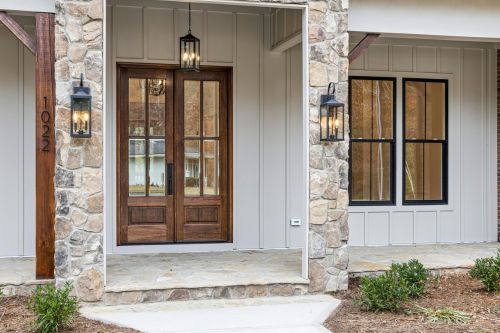
Exterior wood adds warmth, character and aesthetic value to a home, but in coastal areas such as Jávea it needs proper maintenance. Sun, ambient humidity, sea breeze, temperature changes and exposure to rain can damage doors, windows, pergolas, beams, railings, shutters and outdoor furniture.
When wood starts to lose colour, turns greyish, cracks or loses protection, simply applying any product on top is not enough. Before choosing between varnish, wood stain, oil or a protective treatment, it is important to assess the type of wood, its condition, its exposure to the sun and the finish you want to achieve.
In this guide, we explain how to care for exterior wood in homes in Jávea, the differences between varnishes and wood stains, when it is advisable to renew the treatment and when it is best to rely on a professional wood treatment service.
Get in touch with our experts
Quick answer: what treatment does exterior wood need in Jávea?
In homes in Jávea, exterior wood usually needs products that protect against three main factors: solar radiation, humidity and environmental wear. For highly exposed elements, open-pore wood stains are often a practical option because they allow the wood to breathe and make maintenance easier. Varnishes can provide a more sealed and decorative finish, but if they deteriorate, they may require more preparation before renewal.
As a general guide:
| Wooden element | Usual treatment | Purpose |
|---|---|---|
| Exterior doors | Exterior varnish, wood stain or pigmented system | Protect and improve the visible finish |
| Windows and shutters | Wood stain, flexible varnish or exterior enamel | Resist sun, humidity and wood movement |
| Pergolas and beams | Protective wood stain or open-pore treatment | Make maintenance easier and protect against weathering |
| Outdoor furniture | Oil, wood stain or specific protector | Nourish, repel moisture and preserve colour |
| Decking or wooden floors | Oils or walkable protective products | Resist foot traffic, water and wear |
| Old damaged wood | Sanding, renovation and adapted treatment | Restore protection before repainting or varnishing |
If the wood is very cracked, blackened, has lifting varnish or soft areas, it should be inspected before applying a new finish. In some cases, it will be necessary to sand, repair, treat and protect it again from the base.
Why exterior wood deteriorates faster in coastal areas
Jávea has a very pleasant climate for living, but it is demanding for exterior materials. Wood exposed to direct sunlight can lose colour and dry out. Ambient humidity encourages expansion and contraction movements. Proximity to the sea can increase wear on exposed surfaces, especially on façades, terraces, pergolas and exterior joinery.
Wood is a living material. It absorbs and releases moisture, moves with environmental changes and needs products that are compatible with that behaviour. If a finish that is too rigid is applied to exposed wood, it may crack, lift or flake over time.
That is why maintenance should not only be carried out when the wood is already badly deteriorated. Ideally, doors, windows, beams and pergolas should be checked periodically so action can be taken before the damage becomes deep.
If you want to explore this topic from a practical perspective, you can read our guide on wood maintenance in humid climates.
Exterior wood varnish: when to use it
Exterior wood varnish forms a protective film on the surface. It can have a gloss, satin or matt finish, and is often used when you want to preserve the wood grain with a more decorative and sealed appearance.
It is common on entrance doors, windows, shutters, furniture and elements where a more elegant or traditional finish is desired.
Advantages of exterior varnish
Varnish can provide:
- A decorative and uniform finish.
- Surface protection against moisture and dirt.
- Enhancement of the natural grain.
- Different levels of gloss.
- A good result on doors and well-maintained joinery.
When it is applied correctly and the surface is properly prepared, varnish offers a very attractive appearance. However, on highly exposed exterior surfaces, it needs regular checks.
Disadvantages of varnish outdoors
The main disadvantage of varnish is that, if the film cracks or lifts, moisture can enter underneath and damage the finish. In that case, to renew it correctly, it may be necessary to sand, remove loose areas and prepare the wood again.
That is why, before varnishing, it is worth assessing the orientation, the condition of the surface and the level of exposure. A door protected under a porch does not have the same needs as a south-facing window or a pergola in full sun.
If you have a door, window or old element that needs restoring, this guide on how to restore old wooden windows may interest you.
Wood stain for exterior wood: a very useful option in Jávea
Wood stain is a protective product for wood that penetrates the surface and leaves the grain visible. Unlike some traditional varnishes, many wood stains are open-pore products, allowing the wood to breathe and making maintenance easier.
In coastal areas, this feature can be very interesting for pergolas, beams, shutters, fences and other elements exposed to changes in humidity and temperature.
Advantages of wood stain
Wood stain can offer:
- Protection against sun and humidity.
- A natural finish that shows the grain.
- Easier maintenance than many film-forming varnishes.
- Good adaptation to exterior elements.
- The possibility of pigmented finishes.
- Lower risk of flaking in suitable systems.
Pigmented wood stains usually protect better against solar radiation than completely colourless finishes, because the pigment helps filter part of the sun’s action. For this reason, on highly exposed exterior wood, it is usually advisable to choose tones with some colour, even when looking for a natural result.
When to choose wood stain instead of varnish
Wood stain is usually recommended when you want to protect the wood without creating an excessively rigid film. It is a good option for pergolas, exposed beams, latticework, shutters, fences, exterior decorative elements and wood that has already been treated with compatible products.
It can also be useful when you want easier maintenance. In many situations, renewing a wood stain requires cleaning, lightly sanding and reapplying, provided that the surface is sound and there are no incompatible residues.
You can learn more about this topic in our specific guide on how to treat exterior wood.
Oils and protectors: when they are suitable
Exterior wood oils are mainly used on wood that needs nourishment, water protection and a natural finish. They are common on outdoor furniture, decking, floors, benches, tables and some tropical woods.
They provide a warm and natural appearance, but usually require more frequent maintenance than other systems. On exposed exterior surfaces, oil can lose its effect due to sun, rain and use.
When to use oil for exterior wood
Oil can be useful on:
- Terrace furniture.
- Decking or exterior floors.
- Garden benches and tables.
- Tropical woods.
- Elements you want to keep with a natural appearance.
Before applying oil, the wood must be clean, dry and free from incompatible product residues. If there is old lifting varnish, black stains or degraded areas, the surface must be prepared first.
Preventive treatments against fungi, woodworm and deterioration
Not all exterior wood has the same problem. Some wood needs decorative protection, while other elements require preventive or corrective treatment against fungi, wood-boring insects or structural deterioration.
On beams, old pergolas, damaged joinery or wood with holes, dust, galleries or soft areas, it is advisable to check whether there is woodworm or another type of attack. In these cases, the final finish should not be applied before treating the problem.
If the property has beams or old wooden elements, you can consult our information on eco-friendly anti-woodworm treatments for beams.
How to know if exterior wood needs maintenance
Wood usually gives warning signs before it becomes seriously damaged. These signs indicate that the treatment should be checked:
- Loss of colour or a greyish tone.
- Cracked or lifting varnish.
- Rough surface to the touch.
- Fine cracks.
- Black or greenish stains.
- Dry areas.
- Wood that absorbs water quickly.
- Loss of gloss or protection.
- Flaking of the finish.
- Appearance of dust or loose fibres.
A simple test is to observe what happens when water falls on the wood. If the water forms drops and runs off, it may still retain part of its protection. If it is absorbed quickly and darkens the surface, it probably needs maintenance.
If you want to go deeper into warning signs and preventive routines, review our basic care tips to extend the service life of exterior wood.
How often should exterior wood be treated in Jávea?
There is no single frequency. It depends on the type of wood, the product applied, the orientation, the colour chosen, the level of exposure and the use.
As a general rule, exterior wood should be checked at least once a year. Areas most exposed to direct sun, rain or sea breeze may need maintenance sooner than protected areas.
Elements facing south or west usually suffer more solar radiation. Horizontal pieces, such as tables, benches or decking, tend to deteriorate sooner because they accumulate water and receive more wear. By contrast, a door protected under a porch may remain in good condition for longer.
For a more detailed explanation, you can read our guide on how often exterior wood should be treated again.
Preparing wood before applying varnish, wood stain or oil
Preparation is key. A good product applied over a poorly prepared surface can fail ahead of time. Before treating exterior wood, it is advisable to follow these steps.
1. Clean the surface
Dust, salt deposits from the environment, dirt residues, surface mould and grease must be removed. In coastal exteriors, cleaning is especially important because accumulated particles can affect product adhesion.
2. Check the condition of the previous finish
If the varnish is lifting, the loose parts must be removed. If the wood has an aged but well-adhered wood stain, it may be enough to clean, sand lightly and renew it with a compatible product.
3. Sand or matt down
Sanding helps open the pore, even out the surface and improve adhesion. The intensity of sanding will depend on the condition of the wood and the previous product.
4. Treat stains, fungi or damaged areas
Before applying the decorative finish, black stains, soft areas, cracks or insect attacks should be dealt with. If they are covered without treatment, the problem can continue beneath the finish.
5. Apply the right system
A single coat is not always enough. Some systems require a base coat, primer, protector and finish. It is important to respect drying times, number of coats and application conditions.
The technical guide by Swedish Wood on exterior wood surface treatment highlights that durability depends on the surface, the system chosen and exposure, as well as the importance of protecting wood against sun and moisture.
Varnish, wood stain or paint: what to choose depending on the result you want
The choice does not depend only on protection. The final appearance also matters.
If you want to preserve the natural grain
Choose a wood stain or a transparent/pigmented varnish suitable for exterior use. Wood stain usually offers easier maintenance on highly exposed elements, while varnish can provide a more sealed and decorative finish.
If you want to change the colour without completely hiding the wood
A pigmented wood stain can be a good option. It allows you to renew the tone, protect against the sun and keep part of the texture visible.
If you want maximum coverage
In some cases, an enamel or exterior wood paint may be suitable. It covers the grain more, but can provide a more uniform and modern appearance. It is useful when the wood is very uneven, has visible repairs or when you want to completely change its appearance.
If you want a very natural finish
Oils can be suitable for furniture and decking, but they require more constant maintenance. They are a good option when you accept a regular care routine.
If you are looking for aesthetic advice as well as protection, we can help you with custom colours for wood and exterior surfaces.
Maintenance of exterior wooden doors
Exterior doors are one of the most visible areas of a home. If they are damaged, they can give a neglected impression even when the rest of the house is in good condition.
On wooden doors, it is advisable to check:
- Lower areas exposed to splashes.
- Edges and borders.
- The upper part if it receives direct sunlight.
- Cracks near fittings.
- Loss of gloss or colour.
- Lifting varnish.
An exterior door may need varnish, wood stain or enamel depending on its exposure and the desired finish. If the door has significant aesthetic value, it is better to restore it carefully rather than applying layers on top without preparation.
Maintenance of wooden windows, shutters and blinds
Wooden windows and shutters suffer greatly from sun, humidity and opening and closing movements. They also usually have edges, joints and areas where water can accumulate.
To keep them in good condition, it is advisable to check the joints, sand damaged areas, protect edges and apply flexible products suitable for exterior use.
If the windows are very aged, with cracked varnish or dry wood, a more complete restoration job may be necessary. In that case, you can see our guide on restoring old wooden windows.
Maintenance of pergolas, beams and exterior structures
Wooden pergolas and beams are highly exposed to sun and humidity. In addition, as they have horizontal or sloping surfaces, water can accumulate in some areas.
For these elements, wood stains and open-pore treatments are often practical because they make maintenance easier. It is also important to check joints, end grain, screws and points where water may enter.
Before summer, it is worth checking exterior wood to see whether it needs cleaning, sanding or renewal of the protective coating. You can expand on this point in our guide on preparing exterior wood for summer.
Common mistakes when maintaining exterior wood
Applying product over dirty wood
Dirt, dust and old finish residues can prevent good adhesion. Before applying any product, the wood must be clean and properly prepared.
Using an interior product outdoors
Not all varnishes or protectors are suitable for exterior use. Exposed wood needs products designed for sun, humidity and environmental changes.
Choosing completely colourless finishes in very sunny areas
Colourless finishes can leave wood more exposed to the action of the sun. On exteriors with high radiation, it is usually better to consider pigmented products or products with UV protection.
Not respecting drying times
Applying coats too close together can affect the result. Each product needs its own times and conditions.
Not checking edges, end grain and joints
Many moisture entry points occur at the ends of the wood, joints, screws or poorly protected areas. These parts need special attention.
Waiting until deterioration is obvious
If you wait too long, maintenance can become restoration. Acting in time is usually easier and more economical.
When to call a professional
It is advisable to ask for professional help when the wood has lifting varnish, black stains, cracks, dry areas, loss of protection, old product residues or doubts about which system to apply.
It is also recommended to work with a specialist if the elements involved are main doors, old windows, beams, large pergolas or features that form part of the exterior image of the home.
A professional can assess the condition of the surface, prepare the wood correctly and choose between varnish, wood stain, oil, enamel or protective treatment according to use and exposure.
At Bartolomé Bas Pintores, we work in Jávea/Xàbia and the surrounding area with painting, restoration and exterior wood maintenance solutions adapted to homes, villas, terraces, pergolas and joinery.
Frequently asked questions about exterior wood in Jávea
Which is better for exterior wood, varnish or wood stain?
It depends on the type of element and its exposure. Varnish can provide a more sealed and decorative finish, while wood stain usually makes maintenance easier on exposed exterior wood because it penetrates the surface and allows a more breathable finish.
How often should exterior wood be treated in Jávea?
It is advisable to check the wood at least once a year. Areas most exposed to sun, humidity or sea breeze may need maintenance more frequently than protected areas.
Can wood stain be applied over varnish?
Not always. If the varnish forms a film and is deteriorated, the poorly adhered areas will usually need to be sanded or removed before applying another system. Compatibility with the previous product is key.
Do colourless finishes protect as well as pigmented ones?
On very sunny exteriors, pigmented products usually offer better protection against solar radiation than completely colourless finishes. If you want a natural appearance, you can choose a soft tone that respects the grain.
What treatment does a wooden pergola need?
A pergola needs an exterior protector resistant to sun and humidity. In many cases, an open-pore wood stain is a practical option because it protects, shows the wood and makes future renewals easier.
What should I do if exterior wood has turned grey?
A grey tone indicates surface ageing caused by exposure. It may require cleaning, sanding and applying a new protector. If there are cracks, black stains or soft areas, the condition should be checked before applying any product.
Can I paint damaged exterior wood directly?
It is not recommended. First, the wood should be cleaned, sanded, repaired and treated if it has moisture, fungi, woodworm or residues from old products. Painting over it without preparation can cause peeling or a poor finish.
To finish: protect the wood before deterioration advances
Exterior wood maintenance in homes in Jávea should be carried out with products suitable for sun, humidity and a coastal environment. Varnishes, wood stains, oils and protective treatments can work well if they are chosen according to the type of wood, the condition of the surface and the real exposure of each element.
A timely inspection prevents doors, windows, pergolas or beams from losing protection and requiring more costly restoration. The key is to clean, prepare and apply the right system, not to cover the problem with a quick coat.
If you have exterior wood that is damaged, dry or has lost colour, Bartolomé Bas Pintores can assess the condition of the surface and recommend the most suitable treatment for your home in Jávea and the surrounding area.
Request advice for exterior wood maintenance in Jávea and we will help you protect doors, windows, pergolas, beams or outdoor furniture with a durable and well-cared-for finish.

Bartolomé Bas
Professional painter in Jávea since 1984, specialising in decorative painting, waterproofing, renovations and damp treatment. Founder of Bartolomé Bas Pinturas. More than 35 years of experience transforming homes and business premises on the Costa Blanca.
Professional profiles:
How to tell if a wall needs priming before painting
Finding a crack in a façade just when we are thinking about repainting it raises a logical question: is it enough to fill it and paint over it, or does something else need to be done? The answer depends on the type of fissure, what caused it and, above all, whether it…
Silicate paint: what it is and when to use it on façades and older properties
Finding a crack in a façade just when we are thinking about repainting it raises a logical question: is it enough to fill it and paint over it, or does something else need to be done? The answer depends on the type of fissure, what caused it and, above all, whether it…
Cracks and fissures in façades: what to repair before repainting
Finding a crack in a façade just when we are thinking about repainting it raises a logical question: is it enough to fill it and paint over it, or does something else need to be done? The answer depends on the type of crack, what caused it and, above all, whether it…