
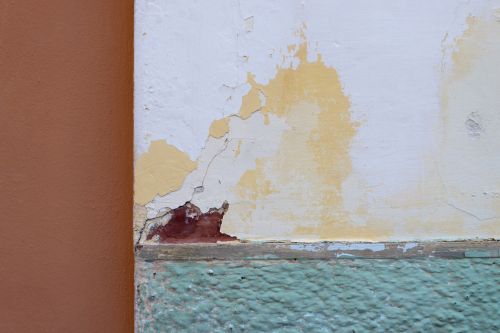
Finding a crack in a façade just when we are thinking about repainting it raises a logical question: is it enough to fill it and paint over it, or does something else need to be done?
The answer depends on the type of fissure, what caused it and, above all, whether it is still moving.
Before painting a façade with cracks or fissures, it is important to determine whether the damage is only superficial or whether it affects the render or the underlying substrate. Stable fissures can be repaired using systems that are compatible with the existing material. Cracks that become larger, reappear, show displacement or are associated with damp require a more thorough assessment before they are covered.
Painting directly over them may hide them for a while, but it does not eliminate the underlying cause.
At Bartolomé Bas Pinturas, we have been working in painting and property renovation since 1984 in Jávea/Xàbia and other towns across the northern Costa Blanca. In our façade repair and painting work in Jávea, a fundamental part of the process is to inspect, prepare and repair the substrate correctly before applying a new exterior paint system.
Get in touch with our experts
A crack cannot simply be fixed with paint
Exterior paint protects and decorates, but it should not be used as a substitute for proper repair work.
When a fissure passes through the render, simply covering it with several coats of paint may make it disappear visually at first. If the underlying cause is still present, however, it will eventually show through again.
In addition, an opening can become a vulnerable point for water ingress, especially when the render has lost adhesion or shows other signs of deterioration.
For this reason, when cracks appear together with flaking, hollow areas, damp or loose material, it is also advisable to check the signs that a façade needs professional renovation before simply refreshing the colour.
The Spanish Technical Building Code (CTE) sets out criteria aimed at limiting the risk of water and moisture affecting buildings. An exterior crack, therefore, should not be assessed purely as an aesthetic defect.
The logical sequence should be:
assessment → repair → preparation → protection → painting
and not:
crack → paint → hidden problem
Is it a superficial fissure or a crack that needs more attention?
The terms fissure and crack are often used interchangeably.
However, before carrying out any repair, it is especially important to understand how the opening behaves, where it appears and what symptoms are present around it.
Fine, superficial fissures
These are small lines visible on the surface of the render or paint.
They may be related to:
- ageing of the render;
- minor shrinkage;
- temperature changes;
- expansion and contraction;
- loss of elasticity in older coatings;
- junctions between different materials.
If they remain stable and only affect superficial layers, they can normally be treated as part of the preparation before repainting.
This does not mean they should simply be painted over. They should first be cleaned, made sound and repaired using products that are compatible with the existing substrate.
Cracks that reappear
This situation deserves particular attention.
If a crack has already been repaired or painted over and reappears in exactly the same place, the problem is not necessarily the paint.
There may be movement in the substrate, a poorly resolved joint, a previous repair that was too rigid or an underlying cause that was never corrected.
Filling it again in exactly the same way may simply cause the problem to return.
Cracks around windows, doors and other junctions
Changes in materials and certain construction junctions are particularly sensitive areas.
It is worth paying attention to cracks that appear:
- next to window corners;
- around doors;
- at wall junctions;
- next to balconies;
- beneath cornices;
- at junctions with terraces;
- around built-in elements.
Not all of them indicate a serious problem, but their location can provide clues about their possible cause.
Cracks accompanied by damp
This changes the way the problem should be approached.
If stains, blistering paint, salts, green growth or interior damp appear around a fissure after rainfall, the first step is to identify where the water is entering before carrying out an aesthetic repair.
Sealing the surface without resolving the source of the moisture may cause the problem to return.
In these cases, it is important to distinguish whether damp is caused by condensation, water ingress or rising damp, because each cause requires a different solution.
The most important question: is the crack stable?
Before deciding how to repair it, it is important to know whether the defect has stabilised or whether the opening is still developing.
There are several signs that justify a more detailed inspection:
- it appears to have increased over time;
- it reappears after being repaired;
- it continues through different areas of the wall;
- the edges show displacement;
- several cracks appear in the same pattern;
- it coincides with deformation or loose material;
- it is accompanied by water ingress;
- it affects different elements of the façade;
- its origin is unknown.
In these situations, the problem should not simply be treated as a painting job.
The first step is to determine what is actually happening.
When there are signs of significant movement or possible construction-related problems, an assessment by a suitably qualified professional may be necessary before any repair or repainting work is carried out.
What should be done before repairing a crack or fissure?
A good repair starts with the area around the crack, not with the tin of paint.
1. Inspect the overall condition of the façade
If a fissure appears, the surrounding areas should also be inspected.
It is common to find:
- flaking paint;
- blisters;
- powdery areas;
- hollow render;
- damp stains;
- mould or green growth;
- salt deposits;
- deteriorated joints.
Repairing only the visible line may leave the real problem untreated.
2. Check whether the façade is powdery
When an exterior wall leaves powder on your hand when touched, there may be surface degradation of the paint.
This phenomenon is commonly known as chalking.
Before applying new coatings, it is important to understand what façade chalking is and why paint becomes powdery, as applying paint over a powdery surface can compromise the adhesion of the new coating.
3. Remove poorly adhered material
A repair filler or mortar needs a sound base.
If there is loose paint, sandy material or deteriorated render around the crack, these areas should be made sound first.
There is little point in carrying out a strong repair over a surface that may later come away.
4. Clean the area properly
Dust generated during preparation can affect the adhesion of subsequent products.
Before carrying out the repair, the surface must be cleaned and prepared in accordance with the system that is going to be used.
5. Choose the repair system according to the substrate
There is no single filler that is suitable for every crack and every façade.
The following factors should be considered:
- the existing material;
- the depth of the damage;
- possible movement;
- exposure to water;
- compatibility between materials;
- the paint system that will be applied afterwards.
A repair that is too rigid in an area subject to slight movement may crack open again.
6. Respect drying and curing times
Once a repair has been completed, the finishing paint should not automatically be applied straight away.
Depending on the product and the substrate, it may be necessary to allow the appropriate curing time, level the surface and apply a primer or stabilising sealer.
The aim is for the repair and the rest of the façade to form a stable and uniform base.
Can flexible paint solve cracks?
Paints and coatings designed to accommodate slight movement can be useful in certain systems, but they do not turn an active crack into a repaired crack.
A flexible coating can help with certain types of microcracking, but it does not replace proper preparation, diagnosis or repair.
The same applies to exterior waterproofing paint: it can form part of a protective system, but the substrate and any fissures must be properly prepared before it is applied.
Choosing the paint before assessing the condition of the façade means doing things in the wrong order.
The substrate should be assessed first.
Only then should the most suitable repair and finishing system be selected.
Cracks in façades in Jávea and the Costa Blanca
Homes in Jávea/Xàbia, Dénia, Moraira, Benitachell and other towns across the northern Costa Blanca are exposed for years to strong sunlight, high ambient humidity, rain, wind and the conditions associated with coastal environments.
This does not mean that every crack is caused by the climate.
Each case should be assessed individually.
However, a small fissure can become a vulnerable point for water ingress if it appears in an area that is highly exposed to wind-driven rain.
In addition to repairing the substrate properly, the choice of finish also matters. In this environment, it is particularly useful to use durable paints for façades in coastal areas that are suited to the exterior conditions of the Costa Blanca.
What happens if we paint without properly repairing the cracks?
The result may look correct immediately after the work is completed.
The problem usually appears later.
The crack becomes visible again
The new finish reflects the opening underneath because the underlying cause is still present.
The repair comes away
This can happen when the repair material is applied over a weak, powdery or poorly adhered substrate.
Blisters or flaking appear
This is more likely when moisture is trapped underneath or when a source of water ingress has not been resolved.
The repair remains visible
A poorly levelled repair or inadequate preparation can cause the repaired area to absorb paint differently from the rest of the façade.
The area has to be repaired again
What initially seemed like a way to save work can end up requiring the surface to be repaired and painted all over again.
If cracks are accompanied by interior staining or water-related deterioration, choosing a paint for walls affected by damp will only make sense once the source of the problem has been identified and corrected.
7 things to check before repainting a façade
You can carry out an initial visual inspection from safe areas without working at height:
- Are there any fissures that were not there before?
- Have any previous repairs opened up again?
- Do cracks appear next to windows, balconies or junctions?
- Is there damp or lifting paint around them?
- Does the wall leave powder on your hand when touched?
- Are there bulging areas or loose render?
- Do interior stains appear after rainfall?
These observations can help determine whether the property only needs preparation and painting or whether repair or renovation work should be carried out first.
Repair first, paint afterwards
A façade may simply need a new coat of paint because of colour fading, ageing or normal wear.
But when cracks, fissures, damp or loose material appear, the finish should be the final step, not the first.
The professional sequence is to inspect the façade, identify the defects, remove deteriorated areas, repair them with suitable materials, resolve any possible sources of water ingress, prepare the substrate and finally apply the exterior paint system.
At Bartolomé Bas Pinturas, we are façade painters in Jávea and we also work in Dénia, Moraira, Benitachell, Gata de Gorgos, Pedreguer and other nearby towns across the northern Costa Blanca.
If you are thinking about repainting your façade and cracks, fissures, flaking or damp have appeared, we can inspect the substrate to determine what should be repaired before applying the new finish.
Request an assessment of your façade before repainting.
Frequently asked questions about cracks and fissures in façades
Can you paint directly over a fissure?
It is not recommended. The condition and possible cause of the fissure should first be assessed, deteriorated areas should be made sound and a repair compatible with the substrate should be carried out. Painting directly over it may hide it temporarily without solving the problem.
How can you tell whether a façade crack is a cause for concern?
It is advisable to request an assessment if the crack becomes larger, reappears after being repaired, shows displacement, affects several areas, is accompanied by loose material or is associated with water ingress. If there are signs of a construction or structural problem, it should be assessed by a suitably qualified professional.
Why does a crack reappear after being filled?
This may be because movement is still occurring, because the product used was not suitable for the substrate or because the original cause was never resolved.
What is used to repair cracks before painting a façade?
It depends on the substrate and the characteristics of the fissure. Different mortars, fillers and repair systems can be used. There is no single universal product suitable for every crack.
Can flexible paint cover cracks?
It can help with certain types of microcracking as part of a correctly designed system, but it does not replace the repair of active or deep cracks or cracks associated with other problems.
Can water enter through a fissure in the façade?
Yes. Certain fissures, deteriorated joints and poorly resolved junctions can allow water to enter. If interior stains appear after rainfall, the source should be identified first.
Do all cracks need to be repaired before painting?
Fissures and defects should be inspected before painting. The type of intervention required will depend on their origin, depth, stability and the overall condition of the render. The important thing is not to apply the finish until it has first been confirmed that the substrate is in suitable condition.

Bartolomé Bas
Professional painter in Jávea since 1984, specialising in decorative painting, waterproofing, renovations and damp treatment. Founder of Bartolomé Bas Pinturas. More than 35 years of experience transforming homes and business premises on the Costa Blanca.
Professional profiles:

How to tell if a wall needs priming before painting
Finding a crack in a façade just when we are thinking about repainting it raises a logical question: is it enough to fill it and paint over it, or does something else need to be done? The answer depends on the type of fissure, what caused it and, above all, whether it…
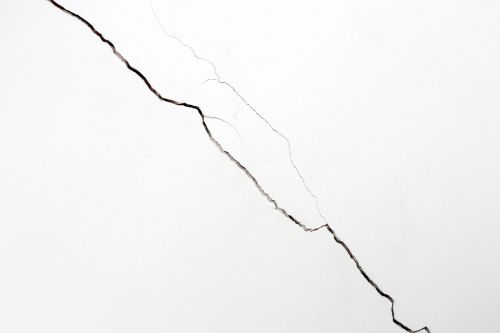
Cracks and fissures in façades: what to repair before repainting
Finding a crack in a façade just when we are thinking about repainting it raises a logical question: is it enough to fill it and paint over it, or does something else need to be done? The answer depends on the type of crack, what caused it and, above all, whether it…
What is the flaking of a façade and why does dust appear when you touch the paint?
After several weeks of rain, it is advisable to inspect the property, even if no obvious leaks have appeared. Water can enter through a deteriorated joint, a crack in the façade, a poorly sealed junction or a faulty drain. In many cases, the first sign is not a leak,…